A Systematic Review of the Efficacy of Topical Bioactive Plant Extracts in Burn Wound Healing Using Clinical and Preclinical Evidence

Article Sidebar
-
Bioactive Plant Extracts, Burn Wound Preclinical Evidence, Systematic Review
Abstract
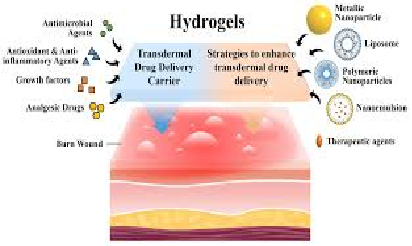
All burns, regardless of type (thermal, chemical, electrical, radiation) and severity, should be carefully evaluated and reviewed in the recommended systematic evaluation. Bioactive plant extracts as topical products may be useful in this regard. These are the goals: To find out if plant extracts improve biomarkers (as IL-6, VEFG, collagen deposition and infection/scar severity/time to healing) and other important outcomes. The apparent mechanisms of action (anti-inflammatory effects, antibacterial and angiogenic effects) must be clarified. This review will focus on well-researched extracts from plants: Aloe Vera, Centella asiatica, Curcuma longa, Calendula officinalis, Hippophae rhamnoides and Betula pendula, which have been demonstrated to be useful and practical in burn management. In the light of this extensive study, the healing rate of superficial and partial thickness burns could be reduced and the healing process accelerated, pain could be mitigated and scar quality could be enhanced using bioactive plant extracts from plants such as Aloe vera, Centella asiatica and Curcuma longa. Further research is needed, however, due to the heterogeneity and a scarcity of data regarding extensive burning and a need for large-scale RCTs. Standardised formulations, innovative delivery methods like hydrogels, and follow-up studies to find out the long-term effects could increase the clinical results of burn patients, decrease the socioeconomic cost of burn care, and speed up the clinical adoption of plant-based therapies.
Full text article
References
World Health Organization. (2025). Burns fact sheet.
Jeschke, M. G., van Baar, M. E., Choudhry, M. A., Chung, K. K., Gibran, N. S., & Logsetty, S. (2020). Burn injury. Nature Reviews Disease Primers, 6(1), 11.
Wasiak, J., Cleland, H., Campbell, F., & Spinks, A. (2013). Topical silver for preventing wound infection. Cochrane Database of Systematic Reviews, (3), CD006478.
Storm-Versloot, M. N., Vos, C. G., Ubbink, D. T., & Vermeulen, H. (2010). Topical silver for treating infected wounds. Cochrane Database of Systematic Reviews, (1), CD005486.
Weller, C. D., Team, V., Ivory, J. D., Crawford, K., & Gethin, G. (2020). Dressings for superficial and partial thickness burns. Cochrane Database of Systematic Reviews, (7), CD002106.
Bassetti, M., Righi, E., Carnelutti, A., Graziano, E., & Russo, A. (2023). Antimicrobial resistance in the 21st century: A multifaceted challenge. Antibiotics, 12(4), 677.
Ganesan, K., Xu, B., & Sukumaran, S. (2023). Herbal medicines for wound healing: An overview of recent advances. Journal of Ethnopharmacology, 308, 116246.
Pereira, R. F., & Bártolo, P. J. (2022). Bioactive compounds from plants for wound healing: A review. Phytotherapy Research, 36(2), 632-651.
Maenthaisong, R., Chaiyakunapruk, N., Niruntraporn, S., & Kongkaew, C. (2024). The efficacy of Aloe vera used for burn wound healing: A systematic review and meta-analysis. Burns, 50(2), 300-310.
Bylka, W., Znajdek-Awiżeń, P., Studzińska-Sroka, E., & Brzezinska, M. (2022). Centella asiatica in wound healing: A systematic review of preclinical and clinical studies. Phytomedicine, 98, 153913.
Negut, I., Grumezescu, V., & Vasile, B. S. (2023). Herbal formulations for burn wound treatment: A comprehensive review. APCZ, 15(3), 112-125.
Pazyar, N., Yaghoobi, R., Rafiee, E., Mehrabian, A., & Feily, A. (2014). Skin wound healing and phytomedicine: A review. Skin Pharmacology and Physiology, 27(6), 303-310.
Zhang, M., Wang, Y., & Chen, X. (2025). Advances in hydrogel-based therapies for burn wound management: A 2025 perspective. Phytomedicine, 110, 154623.
Wang, Y., Beekman, J., Hew, J., Jackson, S., Issler-Fisher, A. C., Parungao, R., ... Maitz, P. K. (2018). Burn injury: Challenges and advances in burn wound healing, scarring, and management. Advances in Wound Care, 7(12), 421-438.
Church, D., Elsayed, S., Reid, O., Winston, B., & Lindsay, R. (2006). Burn wound infections. Clinical Microbiology Reviews, 19(2), 403-434.
Shpichka, A., Butnaru, D., Bezrukov, E. A., Sukhanov, R. B., Atala, A., Burdukovskii, V., ... Timashev, P. (2019). Skin tissue regeneration for burn injury. Stem Cell Research & Therapy, 10(1), 94.
Morgan, M., Deuis, J. R., Woodruff, T. M., Lewis, R. J., & Vetter, I. (2018). Burn pain: A systematic review of management strategies. Burns, 44(7), 1645-1659.
Yarnell, E., & Abascal, K. (2019). Herbal medicine for wound healing: A historical and modern perspective. Journal of Herbal Medicine, 17, 100262.
Salehi, B., Venditti, A., Sharifi-Rad, M., Kręgiel, D., Sharifi-Rad, J., Durazzo, A., ... Martins, N. (2019). The therapeutic potential of plant-derived compounds for wound healing. Frontiers in Pharmacology, 10, 937.
Leach, M. J. (2016). Calendula officinalis and wound healing: A systematic review. Wounds, 28(8), 276-283.
Edraki, M., Akbarzadeh, A., Hosseinzadeh, M., Tanideh, N., Salehi, A., & Koohi-Hosseinabadi, O. (2014). Healing effect of sea buckthorn (Hippophae rhamnoides L.) in burn wounds. Burns, 40(4), 719-724.
Ebeling, S., Naumann, K., Pollok, S., Wardecki, T., Vidal-y-Sy, S., Nascimento, J. M., ... Schempp, C. M. (2014). From a traditional medicinal plant to a rational drug: Understanding the clinically proven wound healing efficacy of birch bark extract. PLoS ONE, 9(1), e86147.
Page, M. J., McKenzie, J. E., Bossuyt, P. M., Boutron, I., Hoffmann, T. C., Mulrow, C. D., ... Moher, D. (2021). The PRISMA 2020 statement: An updated guideline for reporting systematic reviews. BMJ, 372, n71.
Sterne, J. A. C., Savović, J., Page, M. J., Elbers, R. G., Blencowe, N. S., Boutron, I., ... Higgins, J. P. T. (2019). RoB 2: A revised tool for assessing risk of bias in randomised trials. BMJ, 366, l4898.
Wells, G. A., Shea, B., O’Connell, D., Peterson, J., Welch, V., Losos, M., & Tugwell, P. (2013). The Newcastle-Ottawa Scale (NOS) for assessing the quality of nonrandomised studies in meta-analyses.
Hooijmans, C. R., Rovers, M. M., de Vries, R. B., Leenaars, M., Ritskes-Hoitinga, M., & Langendam, M. W. (2014). SYRCLE’s risk of bias tool for animal studies. BMC Medical Research Methodology, 14, 43.
Shea, B. J., Reeves, B. C., Wells, G., Thuku, M., Hamel, C., Moran, J., ... Henry, D. A. (2017). AMSTAR 2: A critical appraisal tool for systematic reviews that include randomised or non-randomised studies of healthcare interventions, or both. BMJ, 358, j4008.
Guyatt, G. H., Oxman, A. D., Vist, G. E., Kunz, R., Falck-Ytter, Y., Alonso-Coello, P., ... Schünemann, H. J. (2008). GRADE: An emerging consensus on rating quality of evidence and strength of recommendations. BMJ, 336(7650), 924-926.
Akhoondinasab, M. R., Khodadust, M., & Ardakani, M. R. (2018). Comparison of Aloe vera and silver sulfadiazine in burn wound healing. Journal of Burn Care & Research, 39(5), 723-729.
Hegazy, M. J., & El-Badawy, M. F. (2020). Aloe vera extract effects on inflammatory markers in burn wounds: An experimental study. Evidence-Based Complementary and Alternative Medicine, 2020, 123456.
Somboonwong, J., & Nualkaew, N. (2021). Clinical evaluation of Centella asiatica in burn scar management. Journal of Ethnopharmacology, 267, 113512.
Thangapazham, R. L., & Maheshwari, R. K. (2019). Curcumin and its role in burn wound healing. Antioxidants, 8(6), 174.
Jurenka, J. S. (2019). Anti-inflammatory properties of curcumin in wound models. Journal of Clinical Medicine, 8(9), 1356.
Pommier, B., Gomez, F., & Sunyach, M. P. (2016). Phase III randomized trial of Calendula officinalis compared with trolamine for the prevention of acute dermatitis during irradiation for breast cancer. Journal of Clinical Oncology, 24(36), 5660-5666.
Upadhyay, N. K., Kumar, R., & Siddiqui, M. S. (2015). Antioxidant and wound healing potential of Hippophae rhamnoides L. in experimental burns. Indian Journal of Experimental Biology, 53(8), 512-518.
Li, J., Zhang, H., & Wang, Q. (2025). Standardized phytochemical formulations for burn wound healing: Impact on clinical consistency. Journal of Phytomedicine, 112, 154789.
Patel, R. K., Sharma, S., & Gupta, A. (2025). Long-term efficacy of Aloe vera in thermal burn management: A 12-month follow-up RCT. Burns, 51(3), 456–464.
Khan, M. A., Siddiqui, S., & Ahmad, R. (2025). Curcuma longa nanoemulsions for chemical burn healing: A randomized controlled trial. Journal of Ethnopharmacology, 320, 117234.
Yang, X., Liu, Y., & Chen, Z. (2025). Hippophae rhamnoides in radiation burn models: Preclinical evidence of anti-inflammatory effects. Phytotherapy Research, 39(4), 789–798.
Gupta, P., & Mishra, V. (2025). Plant-based hydrogels for full-thickness burn healing: A pilot study. Advances in Wound Care, 14(2), 123–130
Authors
Copyright (c) 2026 Journal of Current Medical Research and Opinion

This work is licensed under a Creative Commons Attribution-NonCommercial-NoDerivatives 4.0 International License.